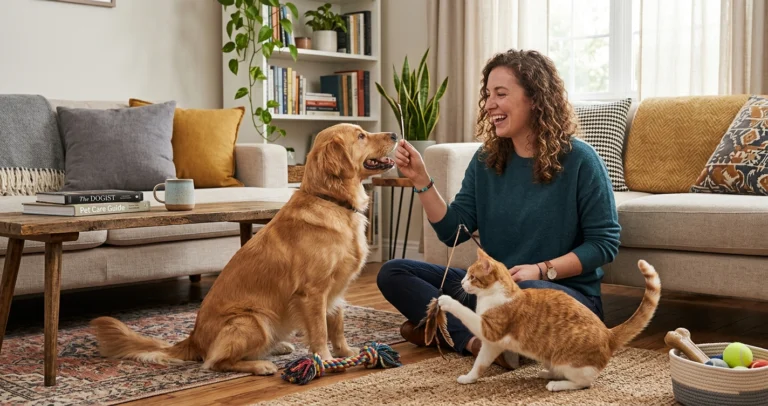
If you work full days and worry about your dog holding it too long, or your cat going hours without company, you’re not the only one asking this question. It’s one of the most common reasons pet owners look for help in the first place.
For families in Chelmsford, Massachusetts and the surrounding area, Lisa’s Pet Sitting offers midday dog walks, cat check-ins, and small-pet visits built around a normal workday. But a professional pet sitter isn’t the only option out there, and knowing what else exists can help you figure out what actually fits your pet, your schedule, and your budget.
Why Pets Need Attention During a Workday
This isn’t just about convenience. It’s about comfort and health.
Adult dogs generally need a bathroom break every six to eight hours, and going much longer than that on a regular basis can lead to discomfort or urinary issues over time. Puppies, senior dogs, and dogs with medical conditions typically need breaks far more often than that. If your workday runs nine or ten hours, a dog left completely alone is likely going past what’s comfortable for them.
There’s also a behavioral side to it. Some dogs cope with alone time just fine. Others show signs of stress, such as pacing, whining, destructive chewing, or accidents in the house, particularly around the time you leave. These can be signs of separation anxiety, and while occasional mild restlessness is normal, more intense or worsening symptoms are worth mentioning to your veterinarian.
Cats are quieter about it, but they still benefit from a midday check-in, especially kittens, senior cats, cats on medication, or cats who simply get lonely. Small pets like rabbits or guinea pigs may need fresh food and water more than once a day regardless of your schedule.
None of this means you need someone in your home every single hour. It means it’s worth understanding what your specific pet can comfortably handle before deciding whether a midday visit makes sense.
Your Main Options for Daytime Pet Care
There are a handful of realistic ways to cover the hours you’re at work.
| Option | Best For | Trade-Offs |
|---|---|---|
| Local, insured pet sitter or dog walker | Pets who do best at home, on their own routine | Requires trust and a meet-and-greet; fewer providers to choose from than an app |
| Doggy daycare facility | Social, high-energy dogs who enjoy other dogs | Not ideal for shy, reactive, or elderly pets; requires transport there and back |
| On-demand marketplace apps | Occasional or last-minute coverage | Sitter may change visit to visit; less consistency for pets who prefer routine |
| A trusted neighbor or family member | Pets who already know the person well | Depends entirely on their availability and reliability; usually not insured or certified |
| Pet camera with automatic feeder | Very short absences or as a supplement to visits | No hands-on care, walks, litter cleaning, or in-person reassurance |
Each of these can work well for the right pet. The goal isn’t to find the “best” one in general it’s to find the one that fits how your pet actually copes with being alone.
How to Decide Which Option Fits Your Pet
A few questions can narrow this down quickly:
- Does your pet do better in a familiar environment, or do they enjoy being around other animals? Anxious, elderly, or territorial pets usually do best staying home. Social, active dogs may genuinely enjoy daycare.
- Does your pet need medication, a specific feeding schedule, or mobility support? That points toward a consistent, trained individual rather than a rotating app-based sitter.
- How predictable is your schedule? If your hours shift often, a flexible app might help. If you’re on a steady 9-to-5, a regular sitter can build a routine your pet learns to expect.
- How much do you want in-person updates versus just data from a camera? Many pet owners want to know their pet was actually fed, walked, and comfortable — not just that food appeared in a bowl.
- What’s your budget per visit, and how many visits per week would you realistically need?
If your answers point toward a pet who needs consistency, in-home comfort, and a person they can get to know, a local in-home pet sitter is usually the closest match.
What a Workday Visit From a Local Pet Sitter Includes
At Lisa’s Pet Sitting, a typical workday visit is built around your pet’s actual routine rather than a generic script. For dogs, that usually means a walk sized to their energy level, a bathroom break, fresh water, and some one-on-one attention. For cats, it means feeding, litter box care, and companionship, since even independent cats benefit from a familiar face checking in. Rabbits, guinea pigs, birds, and other small pets can be included too, with habitat cleaning and feeding handled on their own schedule.
Visits can also include medication administration when needed, which matters if your pet has an ongoing health condition that can’t wait until you’re home.
Every pet must be up to date on vaccinations before service begins, and Lisa is fully insured and certified in Pet First Aid and CPR worth knowing if you’re comparing this option against an unverified neighbor or a rotating app sitter. After each visit, you typically receive an update so you know your pet was fed, walked, and comfortable while you were at work, which is one of the biggest reasons people choose in-home care over leaving a camera running.
If your pet’s needs are more specific say, a shy rescue dog or a cat with anxiety it’s worth reading through how to choose the right pet sitter for your cat or dog before booking anything, so you know what questions to ask regardless of who you choose.
What It Costs
Pricing for workday visits from Lisa’s Pet Sitting is straightforward and based on visit length:
| Service | Starting Price |
|---|---|
| Dog Walking | $20 for a 20, 30, or 40-minute visit |
| Cat Sitting & Care | $20 for a 20, 30, or 40-minute visit |
| Small Pet (“Critter”) Sitting | $15 for a 20, 30, or 40-minute visit |
| General Pet Sitting Visits | Starting at $20 for a 20, 30, or 40-minute visit |
If your schedule occasionally runs later than a midday visit can cover a work trip, a long shift, or overnight travel overnight pet sitting and in-home boarding are also available, though those are less about the standard workday and more about longer absences.
How to Get Started
Booking a local sitter for daytime visits generally follows the same four steps:
- Share your needs. Contact Lisa and describe your pet’s routine, schedule, and any special care requirements.
- Meet and greet. You and your pet meet the sitter in person, and any necessary care forms are completed including a dog profile form or cat profile form if you’d like to fill one out ahead of time.
- Care begins. Visits start based on your pet’s actual routine and needs, not a generic template.
- You receive updates. Expect regular updates and photos so you know exactly how your pet is doing while you’re at work.
If your pet has ongoing medical needs, it’s also worth completing a medical care sheet so nothing gets missed on a busy day.
If a midday visit sounds like the right fit for your pet, reaching out to Lisa’s Pet Sitting is the natural next step you can describe your pet’s schedule and find out whether a regular workday visit makes sense for your household.
Frequently Asked Questions
How do I find someone to walk my dog or check on my cat while I’m at work? Start by deciding whether your pet needs in-home visits or would do well at a daycare facility, then look for someone local who is insured, certified, and willing to do a meet-and-greet before your first booking. A quick trial visit is the best way to see if it’s a good fit.
How long can I leave my dog alone during a workday? Most healthy adult dogs can comfortably go six to eight hours between bathroom breaks, though this varies with age, size, and health. Puppies, seniors, and dogs with medical conditions typically need more frequent breaks. If your workday runs longer than that, a midday visit helps close the gap.
Is a midday pet sitting visit better than doggy daycare? It depends on the pet. Social, high-energy dogs often enjoy daycare, while anxious, elderly, or territorial pets usually do better staying in their own home with a familiar routine.
What does a typical workday pet sitting visit include? For dogs, it’s usually a walk, a bathroom break, fresh water, and attention. For cats, it’s feeding, litter box care, and companionship. Medication can be included for either, if needed.
How much does pet sitting during work hours cost? Pricing is typically based on visit length. As an example, dog walking and cat sitting visits start at $20 for 20, 30, or 40 minutes, with small-pet visits starting slightly lower.
Do I need to be home for the pet sitter to visit? No. Once you’ve completed a meet-and-greet and shared access details, visits happen while you’re at work, and you receive updates afterward.
What if my pet isn’t up to date on vaccinations? Most professional pet sitters, including Lisa’s Pet Sitting, require pets to be current on vaccinations before service begins. This protects your pet as well as any other animals the sitter cares for.
How do I get started with a local pet sitter? Reach out to share your pet’s routine, schedule a meet-and-greet, and go from there. Many sitters also offer profile or care forms to fill out ahead of time so the first visit goes smoothly.
Need someone you can trust with your pet?
Talk with Lisa about dog walking, cat visits, overnight sitting and boarding in Chelmsford, MA.