Coming home to a chewed-up doorframe, a puddle by the door, or a neighbor mentioning the barking again isn’t just an inconvenience for a lot of dogs, it’s a genuine panic response to being left alone. Separation anxiety is one of the most common behavioral concerns veterinarians see in dogs, and it can seriously affect a dog’s quality of life, not just your furniture.
The good news is that once you recognize it, there’s a lot you and the right support system including a consistent pet sitter can do.
What Separation Anxiety Actually Looks Like
Separation-related behavior shows up differently from dog to dog, but there are a handful of signs that consistently point to it rather than simple boredom or a training gap:
- Excessive vocalization
- persistent barking, howling, or whining that starts once you leave and doesn’t settle down.
- Destructive behavior
- particularly focused around exit points chewed door frames, scratched-up doors, or damaged window sills, rather than random destruction throughout the house.
- House soiling
- in a dog who is otherwise reliably house-trained. This is a signal worth taking seriously precisely because it’s out of character though it’s also worth ruling out a medical cause like a urinary tract infection before assuming it’s purely behavioral.
- Pacing, panting, and drooling
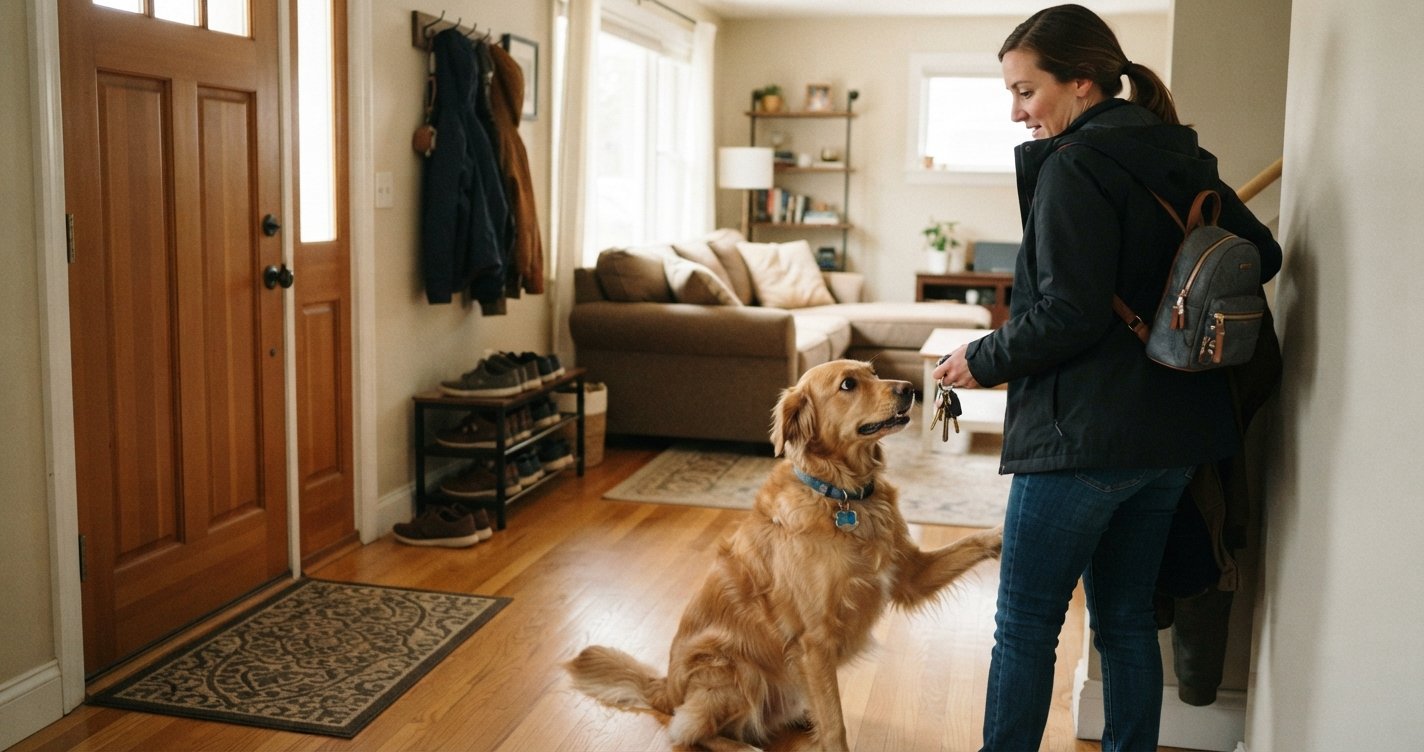
- that begins before you’ve even left many dogs pick up on “predeparture cues” like keys, shoes, or a coat going on, and start showing distress well before the door closes.
- Attempts to escape
- scratching at doors or windows, sometimes severely enough to cause injury to teeth, nails, or paws.
Veterinary behavior researchers have found that separation-related distress in dogs isn’t really one single problem a large study identified several distinct underlying patterns, including dogs trying to get away from something inside the house, dogs trying to reach something outside, dogs reacting to external noises or events, and a form of frustration linked to boredom.
In other words, two dogs showing the same barking-and-chewing behavior might be dealing with genuinely different underlying causes, which is part of why a one-size-fits-all fix doesn’t always work.
Is It Separation Anxiety, or Just a “Velcro Dog”?
Not every dog who’s thrilled to see you at the door, or who follows you from room to room, has separation anxiety that clingy pattern is sometimes just called “Velcro dog” behavior and isn’t automatically a problem on its own. The distinguishing factor is genuine distress during the actual separation: a Velcro dog might greet you enthusiastically but settle calmly while you’re gone, while a dog with separation anxiety shows real signs of panic pacing, vocalizing, destructive behavior, or house soiling specifically during your absence.
If you suspect separation anxiety, a trip to the vet is a sensible first step, since some medical conditions and other behavioral issues can look similar on the surface, and ruling those out first makes any behavior plan more likely to actually work.
What Actually Helps
Desensitizing predeparture cues
Many dogs start reacting the moment they see you pick up your keys or put on shoes. Practicing these actions repeatedly without actually leaving picking up your keys and sitting back down, putting on your coat and staying home can gradually reduce the anxiety response tied to those specific cues.
Building calm, gradual independence
Short, low-stakes absences that build up slowly tend to work better than expecting a dog to suddenly cope with a full workday alone, especially for a dog with a more severe response.
Avoiding a dramatic departure and return
As hard as it is, keeping arrivals and departures low-key rather than a big, emotional goodbye or an excited reunion helps reduce the emotional spike a dog associates with you leaving.
Getting professional support for more severe cases
For dogs showing serious distress injuring themselves trying to escape, refusing to eat while alone, or not improving with basic management a veterinarian or a certified veterinary behaviorist can build a tailored plan, which may include structured behavior modification and, in some cases, medication as part of a broader treatment approach.
Where a Consistent Pet Sitter Fits Into the Pictuer
Shorter Alone Time
In-home pet sitting can make a real difference for anxious dogs. A midday visit or walk breaks up a long workday, reducing the amount of time your dog spends alone and providing a calm, familiar presence during the day.
Familiar Routine
Consistency is especially important for dogs with separation anxiety. Having the same sitter follow a predictable schedule and calm routine helps your dog feel more secure. Lisa’s dog walking and in-home pet sitting services focus on providing familiar, personalized care rather than rotating sitters.
Extra Support
A pet sitter can be an important part of managing mild-to-moderate separation anxiety, but severe cases may require professional help. Combining consistent in-home visits with guidance from a veterinarian or behaviorist can provide your dog with more effective, well-rounded support.
Frequently Asked Questions
How do I know if my dog has separation anxiety or is just bored?
Look at when the behavior happens. Separation anxiety symptoms vocalizing, destruction near exits, house soiling cluster specifically around your departure and absence, often starting within minutes of you leaving. Boredom-driven behavior tends to be less tied to the specific act of you leaving and more spread throughout the time a dog is under-stimulated, regardless of who’s present.
Can separation anxiety in dogs be fully cured?
Many dogs improve significantly with consistent management and, where needed, professional behavior support though “cured” isn’t always the right framing. The goal is usually to get a dog to a place where being alone no longer triggers genuine panic, which is achievable for most dogs with the right combination of training, routine, and support.
Will getting a second dog fix my dog’s separation anxiety?
Not reliably. Separation anxiety is usually about attachment to a specific person or persons, not simply about being physically alone, so another dog in the house doesn’t automatically solve it and in some cases adds a second dog’s needs to manage. It’s worth discussing with a vet or behaviorist rather than assuming it will help.
Can a pet sitter replace veterinary treatment for severe separation anxiety?
No. For dogs showing severe distress self-injury while trying to escape, refusing to eat, or no improvement with basic management veterinary or veterinary behaviorist involvement is important. A consistent pet sitter is a strong complement to that care, particularly for shortening long absences, but isn’t a substitute for it in serious cases.
Should I make a big deal out of leaving and coming home?
Generally, no. Keeping departures and arrivals calm and low-key, rather than emotional, tends to reduce the anxiety spike a dog associates with your absence.
Conclusion
Separation anxiety is genuinely distressing for a dog, not just an inconvenience for you and recognizing the real signs early makes a meaningful difference in how manageable it is.
If your dog struggles with being alone, a consistent, familiar pet sitter who understands their specific routine and triggers can be a real part of the solution, alongside guidance from your veterinarian for anything more than mild anxiety.
Worried about how your dog handles being alone?
Reach out to talk through a care plan built around your dog’s actual routine and comfort level.
Need someone you can trust with your pet?
Talk with Lisa about dog walking, cat visits, overnight sitting and boarding in Chelmsford, MA.